Tuesday, 31 July 2012

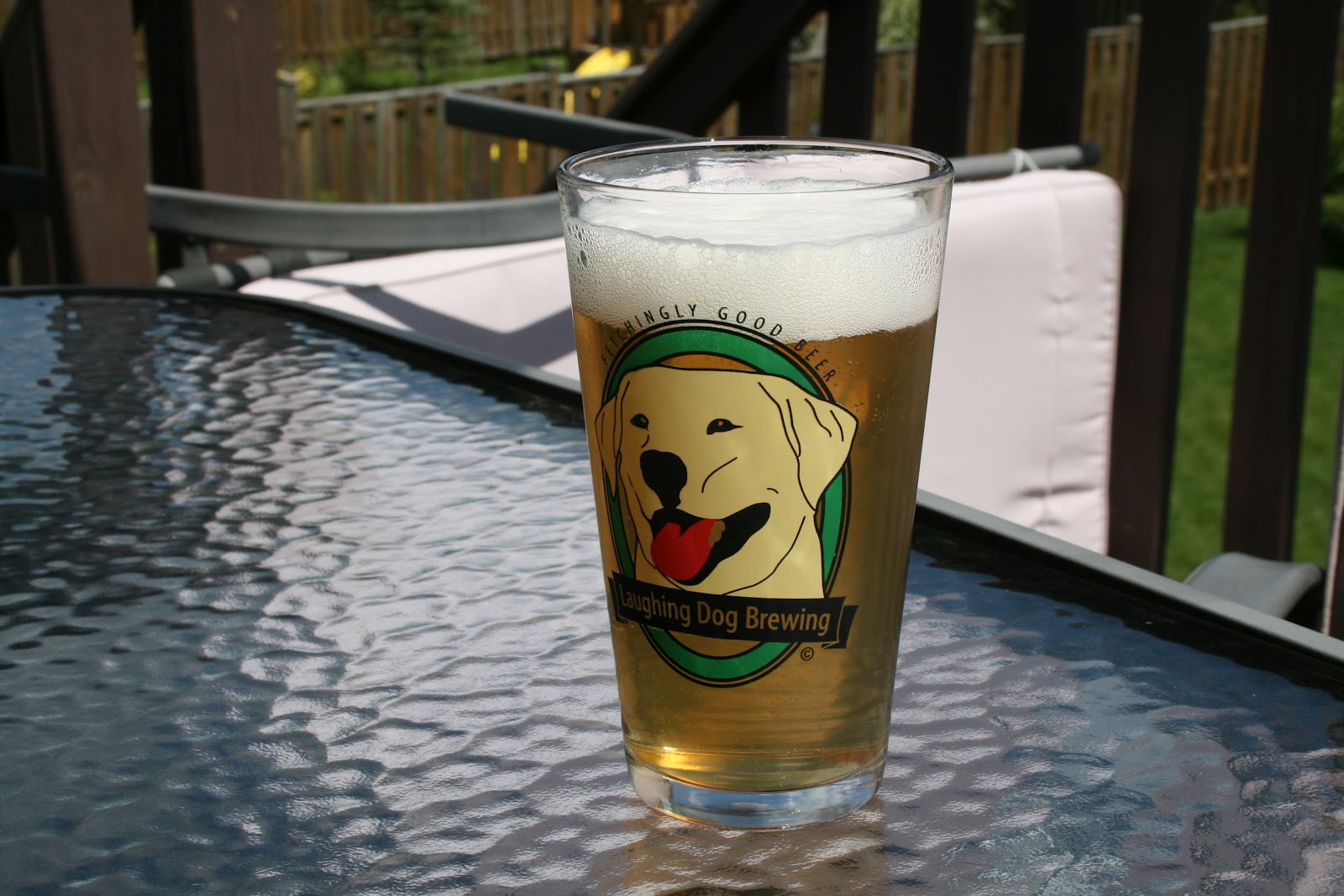
Showdown : Suits Us Amber vs. Anderson Valley Boont Amber

When I brewed this clone recipe of Anderson Valley's Boont Amber last year, I was pretty pleased with the results. The recipe was definitely a bit odd... very little pre-flameout hopping (with equally low bitterness), with a large addition of Cascade at flameout to provide a good amount of hop aroma. I had had Boont Amber before, but that was more than two years ago, so I really couldn't say whether my clone was close to the mark or not.

Now, over a year after the clone was bottled, Boont Amber is available in Canada. Not in New Brunswick, of course, but my brother was able to bring a couple of cans with him from Calgary at the start of the summer. Luckily, I still had two bottles of my clone left over... not exactly ideal, of course, comparing the two beers when my clone is so old, but better than nothing!


Appearance: Very, very similar. The clone version seems to be just a hair darker (less so than it appears to be in the picture), and the head is a touch larger and has better retention.

Aroma: The Boont is pretty mellow... it has a nice caramel quality to it, about what you'd expect from an American Amber... not sure where those late-addition hops are, though. The clone's aroma is stronger, and the citrusy hops are very dominant (even after a year bottled, oddly enough), with the caramel far in the background.

Taste: The clone beer is way past its prime, here. While the caramel sweetness still comes through, with a bit of citrus hops behind it, it finishes sharp and a bit oxidized. The Boont, however, is quite sweet (caramel, again) and malty, with a bit of hop flavor.

Mouthfeel: Both are medium-bodied; the clone has a bit more carbonation than the Boont, and some astringency in the finish.

Overall: Not really a fair test, as the clone beer has some obvious flaws in the taste that I don't remember being there months ago. Still, I'd say that the recipe I used DOES make a beer that comes out at least fairly close to the real thing.

Sunday, 22 July 2012

Tasting : Meekweiser

After just writing a post on my experience brewing a nice, summery Witbier last week, I thought now would be a good time to jot down some tasting notes on the Standard American Lager that I brewed a few months ago. I've been drinking this beer for only a couple of weeks now, but in general I'd have to say that I'm pretty happy with it. Family members and friends - craft and non-craft beer drinkers alike - have also been drinking it, with no complaints (mind you, most don't complain when it comes to free beer). While I still prefer beers with more complexity, a well-made American Lager DOES make a great lawnmower beer!

Appearance: Pours with a moderate-sized, white head that has a little more consistency and retention than most American Lagers. Fades to about 1/2-finger and sits there. Body is light yellow, with very good clarity.

Aroma: Faint hint of sulfur and DMS... the corn is there, but its not overly powerful at all. Otherwise, the whole thing is pretty clean. No diacetyl.

Taste: Light and refreshing. A bit of DMS is there, but not as high as your typical BMC product. No hop flavor. Low bitterness.

Mouthfeel: Medium-high carbonation, and light-bodied.

Overall: Pretty spot-on for the style, I think. Nothing particular stands out in terms of flaws. In fact, if I were to brew this style again, I don't think I'd change the recipe at all. A great lawnmower beer.

Tuesday, 17 July 2012

Brewing a Witbier

Summer is a real double-edged sword for homebrewing for most people. It's a great opportunity to start pumping out your favorite summer beer styles (of which there are many available), but at the same time, it's really the most-difficult season to brew. Standing in your kitchen/garage with a rolling boil going when temperatures are reaching high 20s/low 30s C and humidity is 99.9%, is painful. And controlling fermentation temperatures without a temperature-controlled freezer or fridge can be next to impossible for a lot of us.

Throw in a new baby in the household, and you've got why I haven't brewed in about 10 weeks. Luckily, I had a lot of inventory gather up in the months before my daughter was born, so I wasn't in any desperate need for beer. But I've really missed homebrewing (and blogging about it), so I finally found the time to brew one of my favorite summertime beers: a Witbier, or Belgian wheat beer. Like another great summer brew, German Hefeweizen, it's smooth, creamy, light-colored, and refreshing, with plenty of spice and fruit apparent. Unlike a Hefeweizen, coriander is the main spice flavor/aroma, as opposed to clove. And orange makes up the fruity component, in contrast to the banana flavors in Hefeweizens. The classic example is, of course, Hoegaarden, but some other excellent examples are Allagash White, St. Bernardus Witbier, and Unibroue's Blanche de Chambly.

I brewed a Witbier a couple of years ago (one of my first all-grain beers), and followed the recipe provided by Jamil in Brewing Classic Styles. I was quite disappointed with the result. I had some major thermometer problems during the mash (that I unfortunately did not figure out until quite a ways into it), resulting in an over-extended protein mash and therefore a very small head on the beer. This was secondary, however, to the over-phenolic taste of the beer... I was never sure if this was due to chlorine in the water, or infection. Either way, the beer was drinkable at best.

For this Witbier session, I made sure my thermometer was working (ok, I always do this now), and I ran the brew water through a carbon-filter, as I've done for my last 4-5 batches. I also went with a slightly-different recipe, an almost 50-50 blend of Pilsner malt and flaked wheat, along with a touch of acid malt to bring the pH down a bit, and some flaked oats to help boost the creaminess of the beer. With all of that flaked wheat and oats, I made sure to add about 1/2 lb of rice hulls, to prevent a stuck sparge from occurring.

For this mash, I wrestled with whether to do a protein rest or not. A protein rest (in the 120-130 F range) is often recommended when a high amount (>25% as recommended by John Palmer) of unmalted grain is used (e.g. flaked wheat, oats, rye, etc.), as it helps break up proteins that can cause chill haze, and can improve head retention. The recipe I've used here is >50% unmalted grains, but I've been told by some homebrewers with years of experience that a single saccharification rest would suffice. However, I decided to go with a short protein rest, if anything just for the practice of doing a multi-step mash. Note that a too-long protein rest can actually break the proteins down TOO much, and can lead to a thin, watery beer.

Hop additions were minor, as classic Witbiers aren't supposed to have much in the way of hop bitterness or flavor/aroma. Unlike Hefeweizen, Witbier's spice and fruit complexities don't come entirely from the yeast. They actually involve a spice/fruit ADDITION... in this case, a half ounce each of coarsely-ground coriander seed and dried sweet orange peel. Most recipes call for bitter orange peel, but I still had some sweet on hand from a past brew, so I went with that. You can also use freshly zested orange/clementine/tangerine peel, and it's probably actually better to do so if it's available. The spice and fruit peel don't have to be boiled for long... just the last 3-5 minutes (in a fine-mesh bag), so that the aroma compounds aren't boiled off.

There are two main yeast carried by Wyeast used for brewing Witbier: 3463 Forbidden Fruit, and 3944 Belgian Witbier. It's difficult to tell the difference between the two, at least based on the descriptions on the Wyeast website, so I went with the 3463 since it is carried at my LHBS. With my first Witbier, I actually used the Wyeast 3864 Canadian/Belgian Ale, which is supposed to be the Unibroue strain, since I've always enjoyed their Blanche de Chambly. When I pitched the yeast starter, I put the fermenter in my laundry sink, filled with water and some ice, to keep temperatures hopefully in the high 60s F. While I DO have a temperature-controlled freezer, I currently have a Doppelbock still lagering in there, along with a lot of bottled beer, so it wasn't available to use for fermenting the Witbier.

Recipe targets: (5.5 gallons, 75% efficiency): OG 1.048, FG 1.012, IBU 17, SRM 3, ABV 4.8%

Grains & Other:
2.05kg Bohemian Pilsner
2 kg Flaked wheat
273 g Flaked oats
136 g Acid malt
227 g Rice hulls

Hops:
Hallertau - 28 g (3.4% AA) @ 60 min
Saaz - 14 g (5.5% AA) @ 15 min

Misc.:
1/2 tsp yeast nutrient @ 15 min

Yeast: Wyeast 3463 Forbidden Fruit (PD June 6th, with a 1.25 L starter)

Brad helps out with the hop additions

Water: Fredericton city water, carbon-filtered

- Brewed July 7th, 2012, with Brad. 15-minute protein rest with 11.3 L water, hit target of 122 F. After 15 minutes, added another 7.8 L of water at ~210 F for 45-minute rest, hitting mash temp of about 154.5 F. No mash-out... sparged with 4.75 gallons of water at 168 F for final volume of 7.4 gallons in brew kettle. 90-minute boil. Chilled to 72 F with immersion chiller and pump with ice water; had to put the fermenter in the laundry sink with ice water to drop the temp some more. OG came in low at 1.044 (I always have a big drop in efficiency when using flaked wheat). When temp dropped to 68 F, pitched the yeast starter and aerated by shaking for several minutes. Set fermenter back in laundry sink with ice water.

8/7/12 - In the AM, the airlock was already bubbling very fast, and there was a bit of beer in it... even though the krausen was no longer at the top of the fermenter. Obviously there was an overly-fast start to fermentation, even though the temp was still reading only 68 F. Added a few more ice packs to bring the temp down some more; soon after it was 66 F. Drained water out of sink, and by evening temp was up to 72 F.

9/7/12 - Bubbling already slowed quite a bit, temp still at 72 F.

24/7/12 - FG 1.013. Bottled with 157 g table sugar, aiming for 3 vol C02 for 5 gallons with a max temp of 74 F reached.

Tasting notes here...

Sunday, 24 June 2012

Tasting : Epic Pale Ale clone

I'm way overdue with this post. After brewing the Epic Pale Ale clone, based on the recipe provided from the Can You Brew It podcast on The Brewing Network, I fully intended on posting tasting notes for the beer as soon as possible. I wanted a hoppy beer such as this to be tasted critically while it was still very fresh... BUT, at the same time, I was hoping to pick up the actual beer if I could. However, a trip to Maine didn't come as soon as I'd hoped (and when I finally made it there, I wasn't able to bring any Epic beers back), so I finally did a subjective tasting of my clone attempt, sans the real thing.

I'm happy to say that while I can't really tell you if the result was close to an actual Epic Pale Ale, I AM quite happy with the beer. Even 6 weeks after bottling, the beer is still very hoppy and refreshing. The calculated IBUs are also, as I suspected, a poor representation of the actual perceived-bitterness for the beer - the long whirlpool additions likely contributed more bittering units to the beer than my beer software could account for.

Appearance: Pours with a moderate-large, white fluffy head. Slowly recedes to 1/2-finger. Body is a dark, burnished gold, with very good clarity.

Aroma: Very prominent citrusy hop aroma. Even 6 weeks after bottling, the hops are really coming through. There is some sweetness coming through from the Crystal malt, but there’s no doubt this is a really hoppy pale ale. No diacetyl.

Taste: A bit of sweetness comes through right away, but is followed and dominated by the citrusy Cascade hops. Finishes fairly dry, with moderate bitterness. No diacetyl. No real flaws detected.

Mouthfeel: Medium-light bodied, with moderate carbonation.

Overall: A really tasty APA; I’d love to have an Epic Pale to compare, especially a fresh one, but that’s pretty unlikely. Regardless of how close it is, it’s an APA I would brew again. Next time I’ll probably try the Wyeast 1272 recommended by the Epic brewer.

Wednesday, 6 June 2012

Tasting/Recipe : Donovan Red 2.0

American Amber Ale is simply a great beer style - it gives lots of flavor if brewed properly, and can normally be enjoyed even by the non-beer geek. Normally more balanced towards a malt profile, with an edge of caramel sweetness, the hop presence can be quite low or fairly moderate.

Until, of course, you get to the unofficial West-Coast U.S. version of the style. These beers are usually "bigger" - higher ABV, richer in flavor and aroma, and most importantly, have a very large hop presence in aroma, flavor, and bitterness. There are a lot of excellent hoppy Ambers out there... some that stand out for me are Maine Beer Company's Zoe, Bear Republic Red Rocket Ale, Stone Levitation, and Oskar Blues G'Knight. Perhaps the most-coveted of this style is Troegs Nugget Nectar, but I've never been able to get my hands on it. Either way, I really enjoy this "style", as it has the best of both worlds between your standard Amber Ale and American IPA.

Over two years ago, my third beer that I brewed was the hoppy Amber recipe from Jamil's Brewing Classic Styles. I was still doing extract beers then, and partial-boil at that. The resulting beer was what really opened my eyes to what homebrewing could accomplish... it was really quite good. Caramel-sweet, with a hint of chocolate, and lots of citrus hop flavor. A darker Amber, the head was rocky and long-lasting, and the hop aroma was fantastic. It was so enjoyable that I wanted to try brewing it again last October, but with a few changes to the recipe. I basically kept the grist the same, except this time it was all-grain.

The changes came in the hopping. While the original recipe called for 1 oz each of Cascade and Centennial at 10 minutes and at flameout, I changed the flavor/aroma hops to Crystal and Amarillo at 10 minutes and flameout. I also added 1 oz of each as a dry hop addition for 7 days, to see if I could bump up the aroma of the beer compared to the original. Otherwise, the recipe was about the same, with the Wyeast 1056 American Ale yeast. The resulting beer has been quite tasty - obviously the hop aroma and flavor has faded some, now that the beer has been bottled for over 7 months - but I wouldn't say there is a noticeable improvement over the original recipe.

Appearance: Poured with a moderate-sized, off-white head with good retention. Eventually fades to 1/4-finger. Body is dark copper/red, with very good clarity.

Aroma: Strong aroma of musty, citrusy hops. The caramel sweetness is there in the background, but the hops strongly dominate.

Taste: The biscuit and caramel sweetness are up front and center, but are quickly taken over by a strong citrus flavor from the hops. Quite nice, actually. The bitterness is moderate and firm in the finish. No noticeable diacetyl or other flaws.

Mouthfeel: Medium-bodied, moderate carbonation.

Overall: I like it. Nice strong hop flavor and aroma, but backed by an inviting malt character. The dry-hopping was a nice touch. I'd actually be tempted to increase the dry-hopping next time, maybe to 2 oz of each, and go back to the Cascade and Centennial hops of the original recipe.

Recipe: (5.5 gallons, 75% efficiency) OG 1.064, FG 1.015, IBU 65, SRM 17, ABV 6.4%

Grains:
4.54 kg Maris Otter
454 g Caramunich II (45 L)
454 g Munich malt
227 g Crystal 120 L
227 g Victory malt
85 g Pale Chocolate malt

Hops:
Nugget - 14 g (11.2% AA) @ 60 min
Magnum - 39 g (9.2% AA) @ 60 min
Amarillo - 35 g (6% AA) @ 10 min
Crystal - 35 g (1.7% AA) @ 10 min
Amarillo - 28 g @ 0 min
Crystal - 28 g @ 0 min
Amarillo - 28 g dry hop for 7 days
Crystal - 28 g dry hop for 7 days

Misc.:
1/2 tsp yeast nutrient @ 15 min
1/2 tab Irish Moss @ 5 min

Yeast: Wyeast 1056 American Ale (~250 mL of 2nd-generation slurry, cultured Sept 28th) 

Water: Fredericton city water, mash and sparge water treated with 1/2 tablet of campden.

- Brewed October 4th, 2011, by myself. 60-minute mash with 17.8 L of strike water, mashed in at 151.5 F. Sparged with ~4.5 gallons of 168 F water for final volume of 6.75 gallons in the kettle. SG 1.052 (target 1.054). 60-minute boil. Chilled to 68 F with immersion chiller. Poured/filtered into Better Bottle. Pitched yeast slurry at ~65 F, aerated by shaking for several minutes before and after pitching.

- Fast and furious fermentation over the next few days, slowed down quite quickly. Temperature got as high as 70 F (kept fermenter in ice-water bath to keep temperature lower, as it was a warm week).

- 25/10/11 - Bottled with 122 g table sugar, aiming for 2.5 vol CO2 for 5 gallons with a max temp of 70 F reached.

Wednesday, 30 May 2012

Tasting : Deschutes Black Butte Porter clone

Even though I bottled this clone about 6 weeks ago, I really took my time writing up an actual review of the beer. I've had several of them over the past few weeks, and was a little wary of it overall at first. The carbonation took longer to develop compared to most of my beers. I'm not sure if this was due to pooped-out yeast or not, but I'm quite sure it had nothing to do with temperatures, as the bottles were sitting in a room set at about 70 F, which is my typical bottle-conditioning temperature. After awhile, however, the carbonation finally came around.

I was also worried that the beer would be too sweet, as my FG was high at 1.018, compared to the 1.012 target given by the brewer. I admit that that number seems a bit odd to me; with the target OG of 1.058, a FG that low would give an ABV of about 6%, which is much higher than the actual 5.2% listed by Deschutes for the real Black Butte Porter. This would also indicate an apparent attenuation of 79%, much higher than the average of 69% for Wyeast 1968. Either way, I'm pretty happy with how the beer came out. As usual, I don't have any of the commercial beer on hand to compare, unfortunately!

Appearance: Poured with a moderate-large, very creamy tan head. Pretty good retention, sticks around for quite awhile before fading to 1/2-finger. Body is a very dark brown, even black, and appears opaque... but when held to bright light, yields some ruby highlights and excellent clarity.

Aroma: Aroma of mostly dark, rich chocolate... slightly sweet. Some coffee and roasted notes as well, but maybe not as much of the roasted character as their should be. Perhaps a touch of spicy hops in there.

Taste: Again, while there ARE roasted and coffee notes present, the chocolate really wins out in this beer. There is a touch of tartness that may be from the wheat malt. Hop bitterness is moderate-low in the finish, which is more on the sweet than dry side. No diacetyl.

Mouthfeel: Medium-bodied, moderate-low carbonation. Just a bit of astringency (ok).

Overall: My porter experience is much lower than with other beer styles, but this is a pretty tasty beer. I don’t remember the Black Butte being overly roasty, and wouldn’t have expected as much with this recipe, so I think it’s probably in the ballpark of the commercial beer. Pretty enjoyable overall.

Saturday, 12 May 2012

Tasting : #makingitwork

I'd love to be able to try every beer style out there, and many versions of each style, but it's just not possible right now in New Brunswick. This is where homebrewing comes in handy; you can basically dive in to any beer style and give it a go. However, when evaluating the beer when it's finally ready to be sampled, someone like myself is at a disadvantage - I don't have a commercial example to compare it to. I also don't have full confidence in my palate yet, or my ability to express what I'm smelling or tasting in words.

However, I DO know what I like, and the BJCP style guide is always a big help. So, when I got to sample my Munich Dunkel a few days ago, I was pleasantly surprised overall. This beer was brewed back in January, and was lagered for at least 2 months before being bottled. I had hoped to get a very malty, smooth, easy-drinking dark lager, and I think this beer fits the bill.

Appearance: Poured with a moderate-sized, light tan, thick and moussy head. The head is very long-lasting, before finally fading to almost a full-finger of foam. Body is dark brown with ruby highlights when held to the light, with excellent clarity.

Aroma: Very malty (bready). Slightly sweet, with a touch of milk chocolate. No hops.

Taste: Malty and rich. Not overly sweet at all - the breadiness from the Munich malt far outweighs any sweet characters in the beer. Again, some milk chocolate is present. Just a touch of spicy hop flavor, with moderate-low bitterness in the finish.

Mouthfeel: Medium-bodied, with medium carbonation. Smooth.

Overall: Like I said, pretty happy with the results of this beer. If anything, it could probably be even MORE malty... I wouldn't mind trying one of those recipes where the entire grist is Munich malt, just to see what the results would be like.